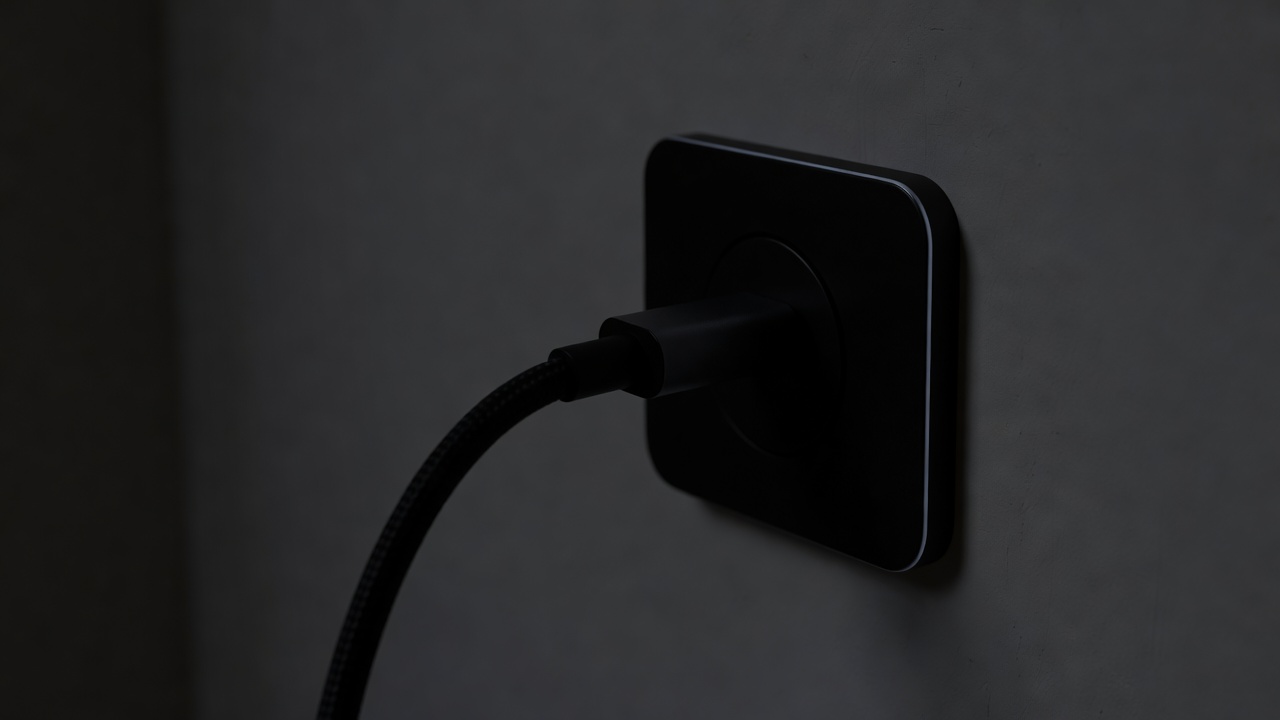
Why power decides the layover
A dead phone turns a layover into a hostage situation. No boarding pass, no map, no translated menu, no way to tell your ride you are late. Power is the one category that decides everything else, which is why it takes the top two spots on our list.
One charger beats three
Airports are not built around your battery. At Heathrow, Schiphol or Frankfurt the good sockets are claimed early and the rest hide behind pillars or under seats. A single multi-port charger means one socket feeds your phone, laptop and earbuds at once, so you only need to win one fight.
Look for gallium nitride (GaN) designs. They run cooler and come in a brick not much bigger than a matchbox. Aim for 65 W total if a laptop is coming along; 30 W is enough for a phone and tablet. Two USB-C ports and one USB-A cover most bags.
The power bank: your second gadget
A wall charger needs a wall. A power bank does not. The 10,000 mAh class gives a modern phone roughly two full charges, weighs about as much as a phone and fits a jacket pocket. That is what you want while walking between gates, queuing for security or sitting in the seat that has no socket.
Prefer one with a visible percentage readout and pass-through charging. Fill it before you leave home. A flat power bank is just a brick with opinions.
Cabin rules for batteries
Lithium batteries go in your carry-on, never in checked luggage. This is a safety rule applied by airlines worldwide, following International Air Transport Association (IATA) guidance. In general, power banks up to 100 Wh travel without special approval, 100 to 160 Wh need airline approval, and anything above 160 Wh is not allowed.
A 10,000 mAh bank is roughly 37 Wh, comfortably inside the limit. Some carriers add their own rules on how many you can carry or whether you can use them in flight, so check your airline before you fly. Keep the terminals covered and the bank out of the hold.
Cables and adapters
Pack one 1 m USB-C cable and one short one. The long one reaches the socket across the walkway; the short one stops your phone dangling over the floor. Braided cables survive bags better.
If your plug does not fit the local socket, add a compact universal adapter. A US two-pin plug will not sit in Singapore Changi's UK-style Type G sockets, for example. Check your charger's label: most modern ones accept 100 to 240 V, which is what you need abroad.
Where sockets hide
- Gate seating with built-in sockets or USB ports (do not count on them).
- Charging pillars and desks in large hubs such as Incheon, Changi and Hamad. Availability varies by terminal.
- The base of big structural columns.
- Empty gates at the far end of the concourse.
- Walls beside vending machines.
Never leave a phone unattended while it charges. Use a short cable and sit where you can see it.
The rule of thumb
For a two to four hour wait, bring the charger. For four to eight hours, bring the charger and the bank. Past eight hours, bring both and a spare cable. Done.