Ninety minutes is the target
You will not get eight hours at a gate, and you should not try. Aim for one sleep cycle: roughly ninety minutes. That is long enough to feel the difference and short enough that you wake before the deep stuff drags you under. If the window is shorter, a twenty-minute doze still takes the edge off.
Set two alarms, one on your phone and one on your watch. Wake at least ninety minutes before departure so you can eat, wash and walk to the gate without sprinting.
The mask: gadget number four
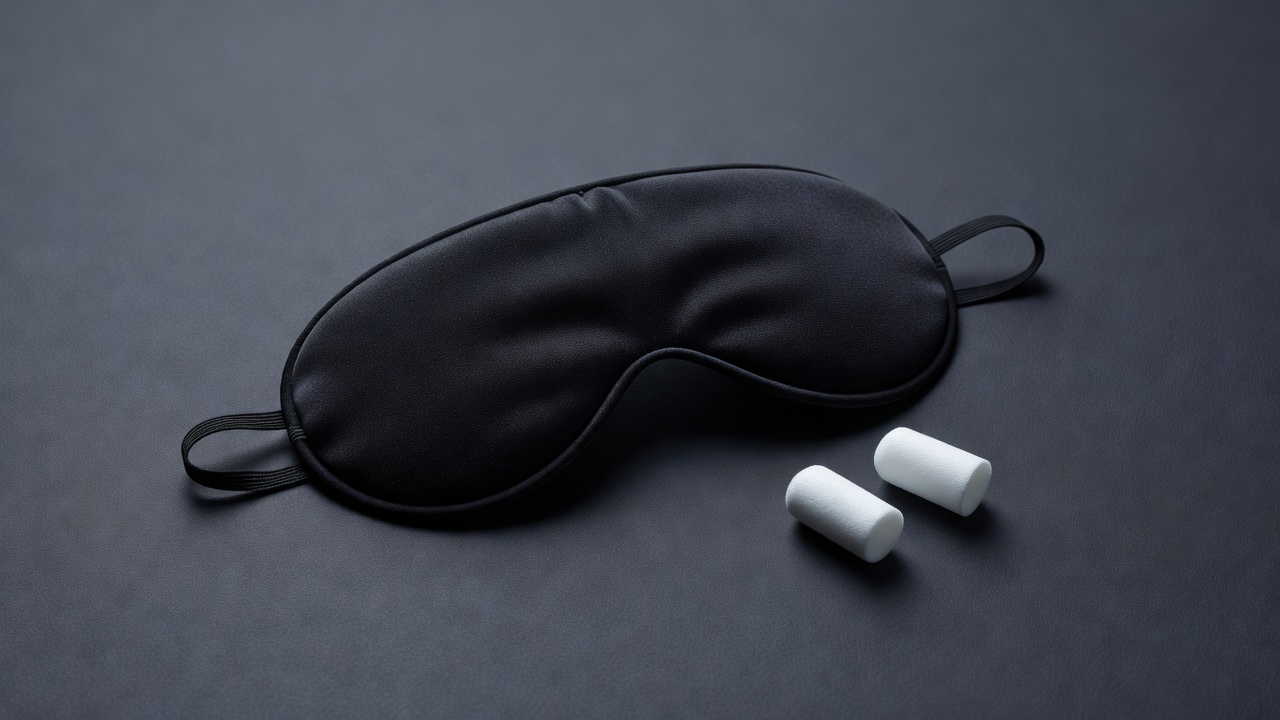
Terminals never go dark. Departures boards glow, cleaners run polishers at 3 a.m., and the lights above the gate rarely switch off. A contoured sleep mask with cups that sit away from your eyelids blocks light without pressing on your eyes.
Look for a wide adjustable strap, a nose flap and a fabric that does not trap heat. Skip the novelty versions with built-in speakers; they die at 2 a.m. and take your comfort with them. Pair the mask with foam earplugs, which cut broadband noise for next to nothing, or reusable silicone ones if you wear them often. Test both at home. A mask that slips at the gate is a mask you will hate.
Make the chair work
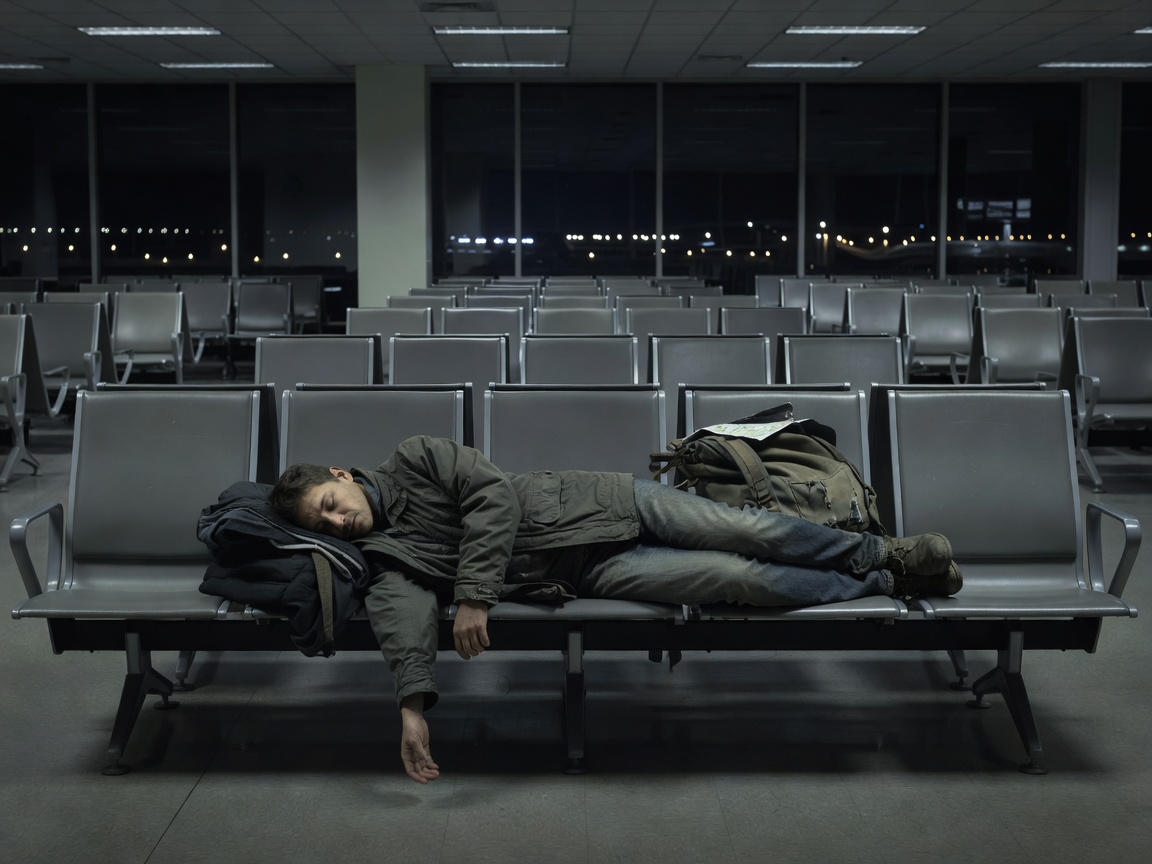
Fixed armrests are the enemy. Look for rows without them, benches in quiet corners, or a stretch of carpet beside a wall socket with your bag under your knees. Terminals run cold, so use a light scarf or jacket as a blanket. An inflatable neck pillow packs flat and stops your head lolling; clip it to your bag when it is not in use.
Sit facing the walkway rather than away from it. Anyone passing can see you are awake enough to notice them.
Sleep safely
Loop a bag strap around your leg or the chair. Keep passport, wallet and phone in a front pocket or an under-clothes pouch. Drop a Bluetooth tracker into any bag you cannot hold; the fifth gadget on our list earns its place here. Do not fall asleep with an open laptop on your knees. No measure is perfect, so sleep light and wake easily.
When to pay for a bed
Past about eight hours, a room can beat a chair. Some hubs have transit hotels that rent by the hour or the night. Examples include the Ambassador Transit Hotel at Singapore Changi, YOTELAIR at Istanbul Airport and Sleep'n Fly lounges at Dubai International. Minute Suites rents small private rooms at several US airports, including Atlanta and Dallas Fort Worth.
Availability and rates change, so check before you count on a room. Weigh the cost against what a night of broken sleep will do to the next day.
Quick kit by wait
- 4–8 hours: a mask and a short doze.
- 8–12 hours: mask, earplugs, neck pillow, scarf.
- 12+ hours: book a transit room if you can.